Source Waffle Making Donut Maker for Cafes, Bakeries, and Retail
Compare 30 waffle making donut maker options from verified suppliers. These units feature automatic control, stainless steel housing, and capacities ranging from 500g to 1000 pieces per hour for commercial and household use; compare the available evidence and request quotations based on your requirements.
Key considerations
Products List




Comprehensive Sourcing Guide
Waffle Making Donut Maker Sourcing Guide
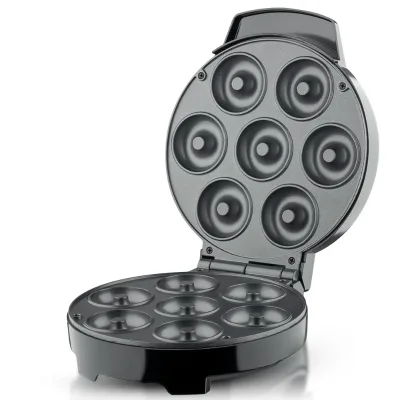
Selecting the right equipment for producing donut-style waffles requires balancing throughput needs with spatial constraints and energy infrastructure. Buyers must first determine whether their operation demands a semi-automatic unit for small-batch artisanal production or a fully automatic industrial machine for high-volume commercial kitchens. The observed market includes models ranging from compact household units to heavy-duty stainless steel commercial appliances, each serving distinct operational scales. Understanding these distinctions is critical before engaging with suppliers, as the mechanical complexity and power requirements vary significantly across the product spectrum.
Procurement decisions should also account for the specific output format, as many machines are designed to produce donut-shaped waffles or dual-function products. Some units offer specialized features such as non-stick cooking surfaces and easy storage designs, which enhance operational efficiency in busy environments. Others focus on thermal processing capabilities suitable for donuts, ice cream, or chocolate applications, providing versatility for menu expansion. Evaluating these functional overlaps ensures that the selected equipment aligns with both current production goals and potential future product diversification strategies without unnecessary capital expenditure.
Product Scope and Observed Listing Signals
The current market landscape for donut and waffle makers exhibits a wide variance in pricing, ranging from approximately $4.55 to $3,500, reflecting differences in build quality, automation levels, and brand positioning. Minimum order quantities (MOQs) typically span from single units for retail or small business purchases to batches of up to 1,000 pieces for large-scale distributors. This broad range indicates a fragmented supplier base catering to diverse buyer segments, from individual entrepreneurs to large food service chains. Buyers should carefully assess whether the listed price includes essential accessories or if additional components are required for immediate operation.
Listing signals also reveal significant variation in product specifications, with observed models including identifiers such as DM5, T100, QX-DN2, and asl-100A. These model numbers often correlate with specific capacity ranges, such as 500g-800g or 800-1000 pieces per hour, allowing buyers to match equipment to their expected daily volume. Additionally, packaging methods differ, with some units shipped in standard cartons while others require wooden cases for protection during international transit. Recognizing these listing patterns helps buyers filter out irrelevant options and focus on suppliers whose product lines align with their specific operational requirements and logistical capabilities.
Technical Specifications to Verify
Power and voltage compatibility are primary technical considerations, as observed units operate on 220V/50Hz or 110V/60Hz systems with power ratings around 1.55kW or 1000W. Buyers must verify that the electrical infrastructure at their facility can support the specific voltage and frequency requirements of the chosen model to prevent operational failures or safety hazards. The driving motor type, often an AC motor, influences the machine's durability and noise level, while the heating method, such as multiple heat pipes, affects cooking uniformity and energy efficiency. Confirming these electrical parameters with the supplier is essential before finalizing any purchase agreement.
Physical dimensions and weight also play a crucial role in equipment selection, with observed machine sizes around 363324cm and net weights near 8kg. These specifications impact kitchen layout planning, including space allocation for installation, maintenance access, and workflow optimization. Temperature control devices and timing mechanisms, typically ranging from 50-250 degrees Celsius and 0-5 minutes respectively, allow for precise customization of the cooking process. Buyers should request detailed technical drawings and operational manuals to ensure that the equipment's physical and functional attributes meet their specific production standards and safety protocols.
Compliance and Safety Documentation
Certification requirements vary by region, but common standards observed in the market include CE, CB, and ISO certifications. Buyers must ensure that the supplier can provide valid certificates for the specific model being purchased, as compliance is often model-specific rather than universal across a supplier's entire catalog. The presence of a CE certificate, for instance, is mandatory for selling or operating equipment within the European Economic Area, while other regions may require different regulatory approvals. Verifying the authenticity and scope of these certifications protects buyers from legal liabilities and ensures that the equipment meets international safety and performance benchmarks.
Safety features and operational controls are equally important, with many units featuring automatic or semi-automatic grades to minimize human error and enhance worker safety. Buyers should inquire about the availability of safety interlocks, emergency stop buttons, and thermal protection mechanisms that prevent overheating or accidental operation. Additionally, understanding the warranty terms, such as a 12-month guarantee time and the provision of free spare parts, is crucial for long-term risk management. Clear documentation of after-sales service policies ensures that buyers have access to necessary support and replacements, reducing downtime and maintaining consistent production quality.
Cost Drivers and Commercial Terms
The total cost of ownership extends beyond the initial purchase price, encompassing energy consumption, maintenance, and potential downtime. Units with higher automation levels and larger capacities, such as those producing 800-1000 pieces per hour, typically command higher prices but offer better economies of scale for high-volume operations. Buyers should evaluate the energy efficiency of the heating system, whether gas or electric, to estimate ongoing operational costs. Additionally, the material construction, often stainless steel for housing, impacts durability and cleaning requirements, influencing long-term maintenance expenses and hygiene compliance.
Commercial terms, including delivery times and payment conditions, significantly affect procurement planning. Observed delivery times of around 15 days suggest a relatively quick turnaround, but buyers should confirm whether this applies to stock items or custom orders. MOQ variations, such as 8 pieces per carton, may influence shipping costs and inventory management strategies. Negotiating clear terms regarding packaging, such as wooden cases for fragile components, and defining responsibilities for customs clearance and insurance can prevent unexpected costs. Establishing a comprehensive understanding of these commercial factors ensures a smoother transaction and better alignment with budgetary constraints.
Supplier Qualification and Quality Control
Evaluating supplier credibility is essential, particularly when sourcing from regions like China, where manufacturing capabilities vary widely. Buyers should request evidence of the supplier's production capacity, quality management systems, and past performance with similar equipment. Verifying the supplier's ability to provide customized solutions, as indicated by available customization options, demonstrates their flexibility and technical expertise. Additionally, assessing the supplier's responsiveness to technical inquiries and their willingness to provide detailed product specifications can serve as a proxy for their overall reliability and commitment to customer satisfaction.
Quality control measures should be explicitly defined in the procurement contract, including pre-shipment inspections and testing protocols. Buyers should inquire about the supplier's internal quality assurance processes, such as stress testing of heating elements and verification of temperature control accuracy. Establishing clear acceptance criteria for product defects and defining procedures for handling non-conforming goods protects the buyer's interests. Furthermore, understanding the supplier's track record in providing after-sales support, including the availability of spare parts and technical assistance, ensures that any post-purchase issues can be resolved efficiently, minimizing operational disruption.
Long-Term Procurement Checks
Building a sustainable supply chain requires ongoing monitoring of supplier performance and product reliability. Buyers should establish key performance indicators (KPIs) related to equipment uptime, defect rates, and response times for service requests. Regularly reviewing these metrics helps identify potential issues early and facilitates constructive dialogue with the supplier regarding improvements. Additionally, staying informed about technological advancements in donut and waffle making equipment can provide opportunities for upgrading or expanding production capabilities in the future. Continuous engagement with the supplier ensures that the partnership remains beneficial and adaptable to changing market demands.
Risk mitigation strategies should include diversifying the supplier base and maintaining a buffer stock of critical spare parts. This approach reduces dependency on a single source and minimizes the impact of potential supply chain disruptions. Buyers should also regularly update their knowledge of regulatory changes and industry standards to ensure continued compliance. By proactively managing these long-term factors, buyers can secure a stable and efficient supply of donut and waffle making equipment, supporting consistent product quality and operational success over time.
FAQs
What certifications are available for commercial donut makers?
Commercial donut makers typically feature CE and CB certifications to ensure compliance with international safety standards. Some models also carry ISOCE certification for broader quality assurance. Buyers should verify specific certificates with suppliers to confirm regulatory alignment for their target markets and operational requirements.
How much power does a standard donut waffle maker consume?
Standard electric donut makers generally operate at 1.55kw or 1000w depending on the model and application. Voltage options include 220V/50Hz or 110V/60Hz to suit different regions. Gas or electric heat power variants are available, allowing buyers to select the most efficient energy source for their facility.
Can I customize the donut maker for specific production needs?
Yes, customization is available for many industrial and commercial donut makers. Buyers can often specify capacity, housing materials like stainless steel, and automatic control features. Customized options allow for tailored timing devices and temperature controls to match precise production workflows and product specifications in professional kitchen environments.
What is the typical delivery time for these machines?
The typical delivery time for donut makers is approximately 15 days after order confirmation. This lead time applies to standard models and may vary based on customization requirements or shipping logistics. Buyers should confirm exact schedules with manufacturers to ensure timely installation and commencement of production operations.
What capacity ranges are available for donut making equipment?
Donut makers offer various capacity ranges, including 500g-800g for smaller batches and 800-1000PCS/H for high-volume industrial production. These capacities cater to different operational scales, from small bakeries to large-scale manufacturing facilities. Selecting the right capacity ensures optimal throughput and efficiency for your specific business requirements.
What warranty and after-sales support are provided?
Most suppliers provide a 12-month guarantee time for their donut makers. After-sales service often includes free spare parts to minimize downtime. Buyers should verify specific warranty terms and support protocols with the manufacturer to ensure comprehensive coverage and reliable maintenance assistance throughout the equipment's operational lifecycle.